What Is FGM?
FGM: an excruciatingly painful procedure that involves life-threatening health risks
An internationally condemned human rights violation, female genital mutilation (FGM) harms girls' bodies and their futures. Over 230 million girls and women alive today have undergone the inhumane practice, a form of ritualized gender-based violence. Most are harmed before their 15th birthday.
FGM is defined as the partial or total removal of the external female genitalia, or other injury to female genitals for non-medical reasons. It is an excruciatingly painful procedure that involves life-threatening health risks and long-term physical and psychological complications.
Some 4.4 million girls were at risk of FGM in 2024 — more than 12,000 cases every day. The UN continues to call for urgent investment to reach the target set in the Sustainable Development Goals (SDGs) of eliminating female genital mutilation by 2030.
"We need to amplify the voices of survivors and support their efforts to reclaim their lives, based on their bodily autonomy," UN Secretary-General António Guterres said in a message marking the International Day of Zero Tolerance of FGM on Feb. 6, 2024.
Five facts about FGM
FGM violates the human rights of girls and women
Rooted in gender inequality and power imbalances, FGM has been performed on infants, girls and women in at least 31 countries across three continents. Diaspora communities sometimes bring the custom with them when they migrate.
An alarming trend is the growing medicalization of the practice. Around 1 in 4 girls and women who have been harmed — 52 million — were subjected to FGM at the hands of health professionals, despite the fact that there are no health benefits. The proportion is twice as high among adolescents.
UNICEF-trained social workers stand up for vulnerable girls who are in danger of being subjected to FGM. UNICEF also provides medical care for girls who have been harmed and traumatized by FGM.

UNICEF co-leads the largest global program to end FGM
UNICEF is working with partners to put a stop to FGM once and for all. And while girls today are one-third less likely to be subjected to FGM compared to three decades ago, the pace of progress remains slow — lagging behind population growth, especially in places where FGM is most common, and far off-pace to meet the global target of eliminating FGM by 2030.
Changing gender and social norms that encourage FGM is critical. UNICEF and the United Nations Population Fund (UNFPA) co-lead the largest global program to promote the elimination of FGM, working to engage families, communities, institutions and policymakers to act as agents of social change.
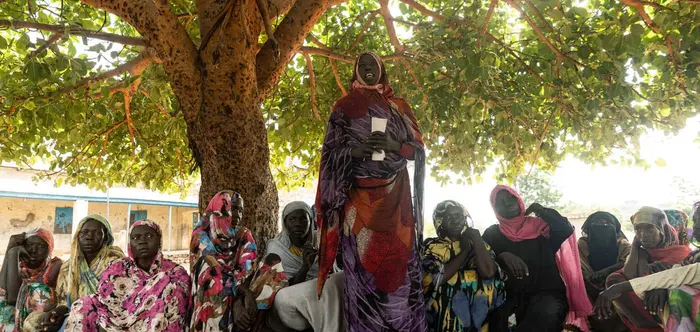
At UNICEF-supported community awareness sessions, women share their experiences and agree to stand up against cultural pressure to subject their daughters to the practice. Youth advocates like 15-year-old Fatima in Sudan's South Kordofan State, whose family condemns FGM, explain the dangers to their classmates and members of their community.
"I believe FGM should stop," said Fatima. "Girls in my school that have been subjected to FGM have very painful periods. It is bad."
Men and boys play an important role in awareness raising too, along with enabling safe environments for girls and women, and — most importantly — detecting, reporting and preventing FGM cases.
Since 2019, UNICEF has supported more than 3,000 initiatives where men and boys actively advocate to bring an end to the practice. In 2024 alone, nearly 850,000 boys and men actively participated in activities to promote positive masculinity and equitable gender norms, and advocated for the elimination of FGM in dialogue sessions with peers.