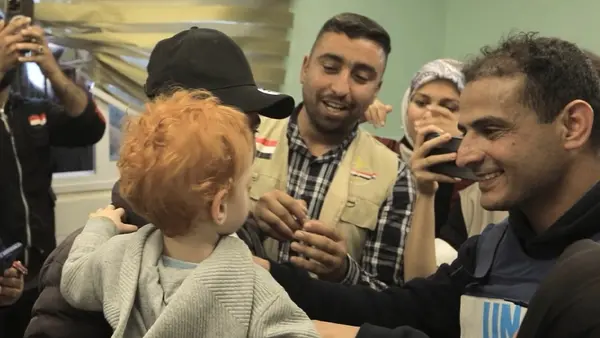
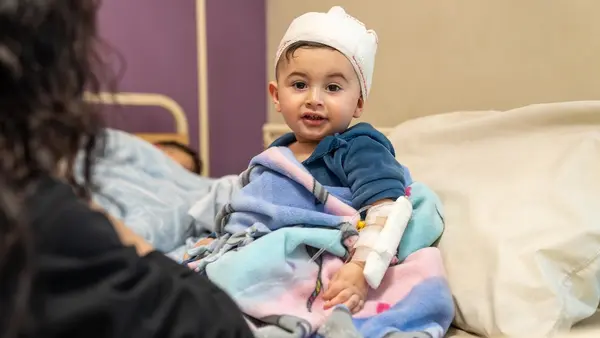
Showing Up to Support Children in Lebanon
Highlights
- Intensified conflict in Lebanon is placing additional strain on already fragile systems
- More than 1.1 million people have been displaced from their homes since March 2026
- UNICEF staff continue to deliver critical aid for children and families
- With UNICEF support, families staying in temporary shelters are helping one another and finding solidarity
Deadly air strikes in Lebanon have killed thousands and forced more than a million people out of their homes. With critical support from UNICEF, families are coming together to help one another survive.
Mass displacement is ongoing: nowhere in Lebanon is safe
Two months after the escalation of hostilities in Lebanon, over 1.1 million people have been displaced, including more than 390,000 children, placing additional strain on already fragile systems in a context shaped by an economic crisis and protracted displacement.
A regional ceasefire agreement, announced in April, has become a ceasefire in name only. As shelling continues, UNICEF staff and partners remain on the ground, delivering critical aid and support to children and their families. "Do we have a choice?" asks Christophe Boulierac, UNICEF Lebanon Chief of Communication and Advocacy. "We have to hold on. We have to carry on. We have to move forward."
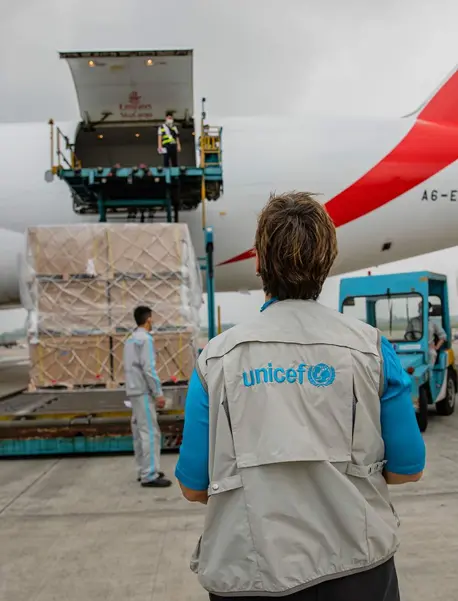
As drones drop bombs nearby, UNICEF staff and partners deliver humanitarian supplies in convoys of armored vehicles. "Some colleagues travel in these convoys almost every day since the beginning of this conflict," Boulierac says. "Objectively speaking, they risk their lives every day."
Read the latest UNICEF Lebanon Humanitarian Situation Report
Courage and cooperation in Lebanon's temporary displacement shelters
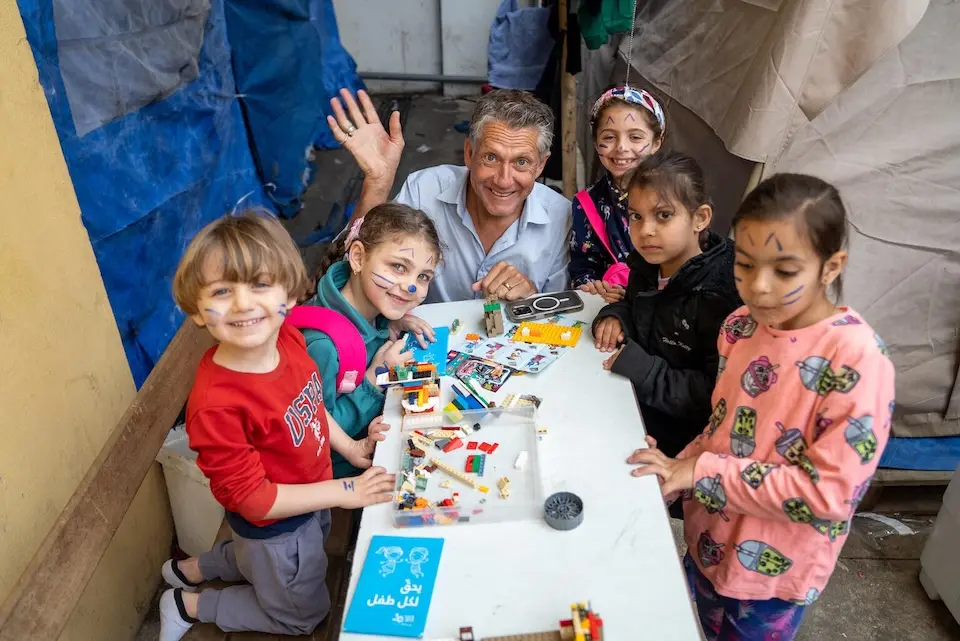
In April, UNICEF spokesperson James Elder met with families staying in displacement shelters in Lebanon. Despite the hardships they face, people are coming together and doing what they can to care for one another. Everyone pitches in.
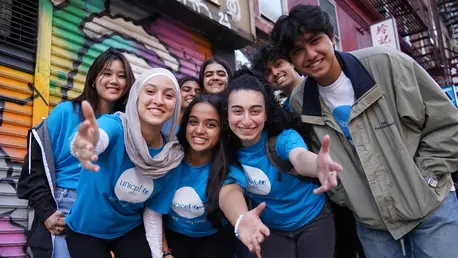
UNICEF trains and pays young people to prepare meals for the displaced, and to sew sleeping bags, warm clothing and blankets for those in need. "They gain skills, they gain income. And they gain agency," Elder says.
Learn more: Youth Bring Warmth to Children Displaced by War in Lebanon
In the first quarter of 2026, UNICEF scaled up its multi-sectoral response in Lebanon to meet rising humanitarian needs:
- reaching 227,455 people with essential services through rapid response mechanisms
- sustaining water services for over 1.4 million people
- expanding access to primary health care for nearly 673,000 people through mobile and facility-based services
- supporting the continuation of learning for at least 348,000 children
Learn more: UNICEF Delivers Aid to Lebanon
International law is clear: children must be protected at all times
Above all, what every displaced child in Lebanon wants most is to go home. To do that, they need a lasting peace.
“This is a crisis where children are paying the highest price — displaced, disrupted and in urgent need of consistent support,” Elder told CNN's Elex Michaelson on April 25. "There's such a degree of impunity, and when that happens, all the attacks are on things that families and children need: homes, hospitals, health care facilities."
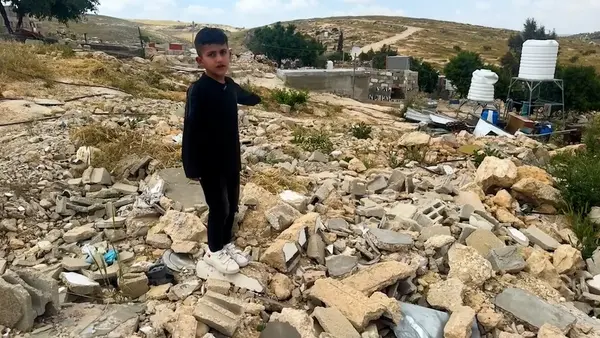
"It makes it much harder for people to go back," Elder continued. "Everyone wants to go home, no one wants to be in a shelter, but if your home has been turned to rubble, or if your home is now occupied or if you're simply going back to an area where the only hospital can't function anymore, all these things are making it very difficult for people."
UNICEF is appealing for $376.8 million in 2026 to address humanitarian needs in Lebanon. As of March 31, 2026, the appeal was only 35 percent funded. Additional funding is critical to support lifesaving and life-sustaining services for children and their families.
Help UNICEF rush aid to children in need
UNICEF USA complies with U.S. sanctions restrictions, and, as such, we do not accept funds specifically designated for programs in Iran. We do, however, raise funds for UNICEF programming in the Middle East and North Africa region.
For parents and caregivers: How to Talk to Your Children About Conflict and War
HOW TO HELP
There are many ways to make a difference
War, famine, poverty, natural disasters — threats to the world's children keep coming. But UNICEF won't stop working to keep children healthy and safe.
UNICEF works in over 190 countries and territories — more places than any other children's organization. UNICEF has the world's largest humanitarian warehouse and, when disaster strikes, can get supplies almost anywhere within 72 hours. Constantly innovating, always advocating for a better world for children, UNICEF works to ensure that every child can grow up healthy, educated, protected and respected.
Would you like to help give all children the opportunity to reach their full potential? There are many ways to get involved.