
Tsunami Relief
UNICEF works in many different ways to save and protect children and families in the wake of a devastating disaster like a tsunami. Learn more.
What is a tsunami?
A tsunami is a series of massive, rapid waves and rises in sea level that cause surges of water, typically due to underwater explosions, landslides, volcanic activity or most commonly, earthquakes. The majority of tsunamis occur in the Pacific Ocean’s “Ring of Fire," they can also occur in the Mediterranean Sea, Caribbean Sea, Atlantic Ocean and Indian Ocean. These giant waves can crash onto land at dozens to hundreds of miles per hour.
How tsunamis endanger children
Tsunamis have the ability to wipe out homes, schools and public infrastructure, robbing kids of the resources and security they need to stay healthy, develop and grow. They can disable sanitation facilities and contaminate water supplies, increasing the risk of diarrheal disease and cholera. With entire communities and cities swallowed whole, children have no choice but to leave their homes in search of safety — some with their families, others orphaned and alone.
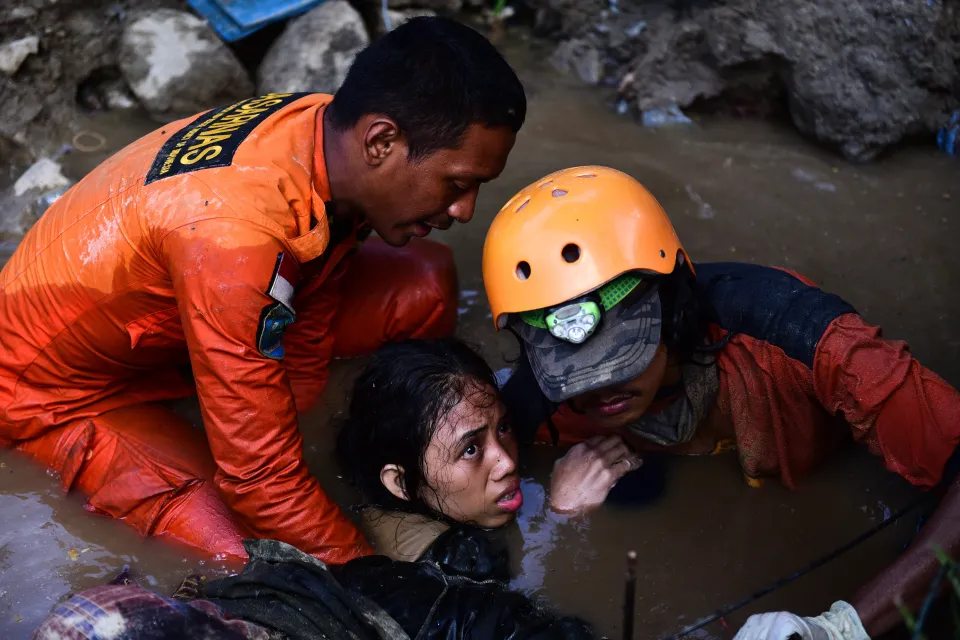
How UNICEF helps children after a tsunami hits
Any time disaster strikes, UNICEF is among the first on the ground, sometimes arriving days before to preposition lifesaving supplies. UNICEF's supply operation, which includes the largest humanitarian supply warehouse in the world, enables the delivery of lifesaving supplies to anywhere in the world within 48 to 72 hours.
In the wake of a tsunami, UNICEF works to save and protect vulnerable children by:
- providing safe water, adequate sanitation, basic nutrition and routine medical care services
- caring for separated and orphaned children, and working to find, identify and reunite them with surviving family members
- protecting children from exploitation and abuse
- getting children back to learning and playing, providing safe Child-Friendly Spaces to help children cope with trauma and regain a sense of normalcy
- working with government and other partners on new policies and practices to strengthen disaster preparedness and to make communities more resilient to extreme-weather events
Building communities back better after a natural disaster
UNICEF works with partners to help affected communities build back better: to construct earthquake-resilient schools, introduce safer water supplies, ensure schools prepare children for emergencies and improve legal and social measures to protect children. UNICEF also invests in building resilience to shocks and disasters by supporting decentralized and community-based health, water and sanitation, education, and social protection systems, working with government and civil society to provide tangible services for children and their families.
Lessons from UNICEF's past disaster response efforts inform future ones. “We have all learned lessons from the tsunami aid operation that have fundamentally altered the way we work," said Ted Chaiban, UNICEF Regional Director of Middle East and North Africa and former UNICEF Representative in Sri Lanka during the 2004 Indian Ocean Tsunami.
Learn more about how UNICEF works to address climate change and its impact on children.