Healthy Classrooms for Kids
Responding to Every Child's Needs
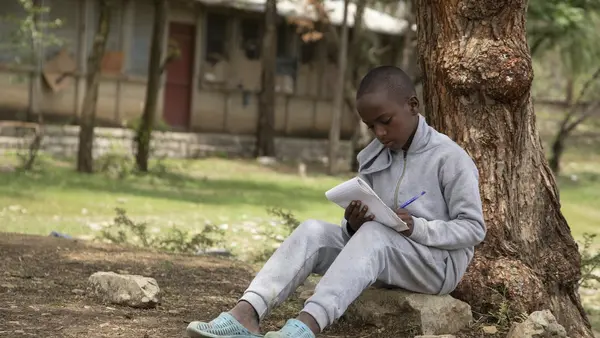
Every day, more than one billion of the world's children go to school. They sit in buildings, in tents or even under trees. UNICEF is committed to making that learning environment a healthy one—free of physical discomforts and discrimination, full of competent teachers and inspiration.
UNICEF understands that schools are not 'one size fits all' institutions, and that children have diverse needs. With this in mind, we have striven to create an educational model aimed at helping schools achieve safe, healthy and protective environments that meet the specific needs of their children.
The child-friendly school model is a simple one:
- Schools should operate in the best interests of the child;
- Educational environments must be safe, healthy and protective;
- Classrooms should be endowed with trained teachers and adequate resources; and
- Within them, children's rights must be protected and their voices must be heard.
Learning environments must be a haven for children to learn and grow, with respect for their identities and varied needs. The child-friendly model promotes inclusiveness, gender-sensitivity, tolerance, dignity and personal empowerment.
Education in Emergencies and After Disaster
The child-friendly approach is the main model through which UNICEF and its partners promote quality education in normal as well as emergency situations. In areas recovering from disaster, child-friendly schools are an important key to "building back better." The model may differ from country to country, but the common denominator across cultures is a focus on child-centered education.
The success of our child-friendly Schools work depends on partnerships with other actors in the international arena. Together, we can help ensure that every child—regardless of whether he or she attends school in a building, a tent or under a tree—receives a rights-based, quality education.
Related Education Links
June 17, 2013
UNICEF, Nelson Mandela Foundation and Peter Krämer Foundation Kick Off Appeal to Expand Schools for Africa Initiative
UNICEF, the Nelson Mandela Foundation and the Peter Krämer Foundation kicked off a new fundraising drive to raise $80 million to help Africa’s girls, orphans, children living in extreme poverty and other children go to get a quality education. They agreed to expand Schools for Africa, which has to date helped benefit 21 million children. The new phase aims to help children in Angola, Burkina Faso, Ethiopia, Guinea Bissau, Madagascar, Malawi, Mali, Mozambique, Niger, Rwanda, Sierra Leone, South Africa and Zimbabwe.
June 7, 2013
In Mauritania Refugee Camps, Education and Opportunity
Mauritania is the largest recipient of refugees fleeing the crisis in Mali. There are approximately 74,000 Malian refugees in Mbera camp, 58 percent of them children under 18. Many have been in Mbera for over a year. UNICEF and partners are providing schooling for some 7,000 students, as well as recreation for pre-school children. But there are around 30,000 school-age children in the refugee camp. With additional funding, UNICEF plans to expand the number of schools, provide tables and benches, and build semi-permanent school structures.
June 3, 2013
In Mongolia, a Lifeline for Children with Disabilities
Uyanga was born with permanent learning disabilities. In northern Mongolia, where Uyanga lives, there are few options for children with disabilities, and she stopped going to school after facing stigma and discrimination. Today, Uyanga attends a UNICEF-supported center that helps children with disabilities learn new skills in a supportive and inclusive environment. The center has become a lifeline for Uyanga—who now enjoys learning and has made friends. Forty children with disabilities are enrolled in the center and in the main school.