UNICEF Funding
Background
© U.S. Fund for UNICEF/Telford
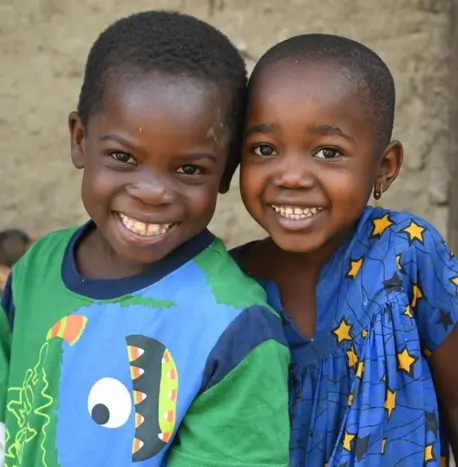
For more than 60 years, in partnership with the U.S. Government and the American people, UNICEF has made an enormous difference in saving children's lives and protecting their futures. UNICEF helped cut the world's child mortality rate in half since 1960, proving that progress for children is possible even in poor countries, with political will, sound strategies and funding.
Sadly, however, many countries are not making progress on child survival. More than 9.7 million children under five years old will die this year, mostly from preventable causes. Pneumonia and diarrhea account for a third of all child deaths, and undernutrition plays a role in half of child deaths. Children are most at risk in sub-Saharan Africa, which accounts for 22 percent of global births, but 49 percent of under-five deaths.
UNICEF is accelerating child survival in Africa by working to implement integrated packages of low-cost interventions for communities and families, a strategy proven to save lives. UNICEF is also a leader in promoting quality basic education for all boys and girls, and protecting children from violence, exploitation and AIDS.
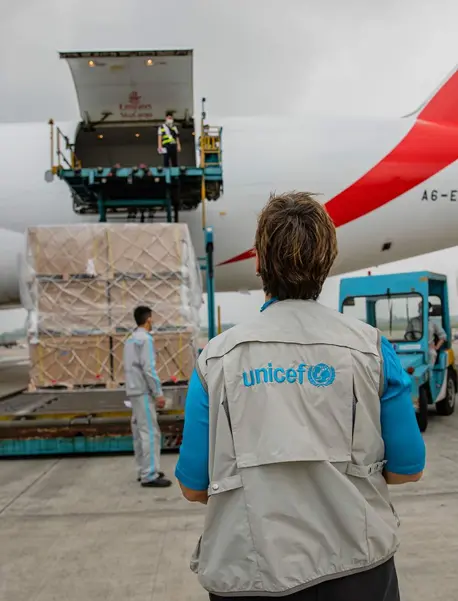
The U.S. Government's contribution to UNICEF is part of America's global investment in children. This annual contribution to UNICEF’s regular budget is critical to UNICEF's work in child survival and development, including the innovative "accelerated child survival" program in Africa. In addition, the U.S. contribution allows UNICEF to partner with the United States in responding to humanitarian needs due to natural disasters and conflicts, and to address threats to children such as trafficking and sexual exploitation.
Although part of the United Nations system, UNICEF does not receive any of the assessed dues that the United States and other nations contribute to the UN. All of the funding UNICEF receives is provided on a voluntary basis, with about two-thirds of contributions coming from governments, and the other third coming from private businesses and citizens.
FY 2009 Appropriations
Every fiscal year, the U.S. Congress must pass appropriations legislation to fund U.S. Government programs and agencies, including the contribution to UNICEF. With bipartisan support, Congress provided a voluntary contribution to UNICEF of $129 million in fiscal year 2008—the highest U.S. contribution ever to UNICEF.
Given the importance and effectiveness of UNICEF's programs, in 2009 we are asking the U.S. Congress to invest $135 million in UNICEF to help save children's live and protect their futures.
With all the competing priorities in this year's budget, chairs of the House and Senate appropriations subcommittees responsible for foreign assistance need to hear from fellow Members of Congress about UNICEF’s request. YOU CAN HELP by urging your Members of Congress to support $135 million for UNICEF for FY 2009.
Take action now
Contact your U.S. Senators and U.S. Representative, urging them to send letters to the chairs of appropriations subcommittees in support of $135 million for the U.S. contribution to UNICEF in FY 2009!


Read the latest news about advocacy issues important to UNICEF on the