
UNICEF's Response to the Haiti Crisis
The multi-layered humanitarian crisis in Haiti keeps getting worse. UNICEF is delivering essential services and support to affected children and families but more support is urgently needed to scale up the response. Learn more, including how to help.
Escalating hunger and malnutrition in Haiti
Violence between armed groups, public health emergencies and a deepening economic crisis endanger the lives and futures of children in Haiti.
Communes are besieged by conflict. An alarming number of children have joined armed groups. Critical social services teeter on the brink of collapse. Humanitarian aid workers are frequently unable to access many communities in deliver urgently needed assistance.
In September 2026, UNICEF reported that an estimated 253,725 children aged 6 to 59 months in Haiti were expected to suffer from acute malnutrition in the coming months — including nearly 94,000 with severe acute malnutrition (SAM) while the unrelenting violence threatens to worsen conditions.
Stories of hope in Haiti
The situation remains dire. Yet there are stories from the ground that show resilience and hope. In one firsthand account, a young girl shared how she survived a violent attack on her neighborhood.
UNICEF is committed to staying and delivering for children in Haiti, determined to reach children with lifesaving support despite the most challenging conditions.
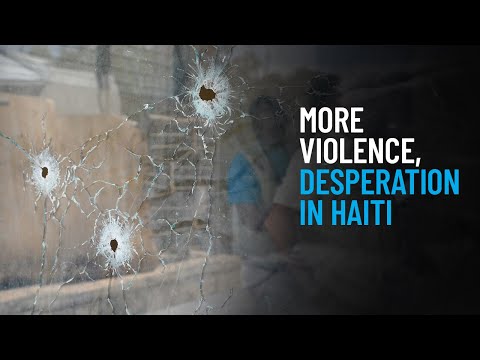
How UNICEF helps ease the impacts of armed violence on children and families
UNICEF helps children displaced by violence in Haiti by establishing safe spaces and distributing emergency relief supplies.
Nearly half the population faces severe food insecurity. Poverty has long been widespread, with nearly two-thirds of the population living on less than $2 a day.
With water and sanitation systems compromised, cholera has returned as a major threat. Providing the necessary services and support to those in need is complicated by fuel shortages and rising insecurity in the greater Port-au-Prince area.
Malnutrition in children makes them more susceptible to disease and less likely to recover from a treatable illness.
Bruno Maes, UNICEF Haiti Representative from 2020 to 2024 explained: “When you are unable to get safe drinking water by tap in your own home, when you don’t have soap or water purifying tablets and you have no access to health services, you may not survive cholera or other waterborne diseases."
Challenges to delivering aid to Haiti

Haiti has long dealt with multiple social, political and economic crises. The country has lost many of its skilled professionals as teachers, health and social workers have fled the country.
Health care, including routine immunization and primary health care services for pregnant women and children, have become increasingly difficult to access.
Hurricanes and floods are constant reminders of the country's vulnerability to climate change. Earthquakes are also a constant threat.
An increasing number of families try to migrate from Haiti, putting more and more children at risk of becoming separated from their parents and missing out on health care and education.
How UNICEF helps children in Haiti
UNICEF continues to deliver the critical supplies children need most —safe water and shelter, access to school and protection from harm.
Despite security and logistical challenges, UNICEF's ongoing response in Haiti includes lifesaving interventions and community-based support programs designed to protect children and families during the crisis.
Key efforts include:
- screening and treating children for severe acute malnutrition (SAM) to reduce preventable child deaths and improve long-term health outcomes
- immunizing children against vaccine-preventable diseases such as measles, polio and diphtheria, especially in hard-to-reach and displaced communities
- expanding access to clean water and improving sanitation and hygiene infrastructure, which are essential to preventing cholera, diarrhea and other deadly waterborne diseases
- reuniting children who become separated from their families and providing care for unaccompanied or orphaned children, ensuring they are protecting and supported
- delivering emotional and psychosocial support to children affected by violence, exploitation or child labor, helping them begin the healing process
- preventing gender-based violence (GBV) by strengthening child protection systems, especially for girls and vulnerable youth in displacement settings
- creating safe spaces for learning, recreation and psychosocial support, where children can access mental health services in a nurturing environment
- re-enrolling out-of-school children and distributing essential learning materials, helping to restore access to education in the midst of crisis
- providing emergency cash assistance to vulnerable families, enabling them to meet basic needs like food, clothing, and transportation
UNICEF continues to urge the international community to work with the Haitian people and help provide a response that can better restore trust, hope and respect for international human rights law. “By doing so, the international community will send a powerful message of unity and hope, not only to the people of Haiti but also to civilians across the world who are suffering violence, deprivation, and human rights abuses and violations," UNICEF Executive Director Catherine Russell said.
With conditions projected to worsen between December 2026 and May 2027, UNICEF and partners are calling on the government of Haiti, donors, civil society, international organizations and all partners working in the fields of health, nutrition, water and hygiene and food security for immediate action to expand treatment and prevent more children from becoming malnourished.
Advocating to help Haiti
Urgent international support and coordinated action is needed to help Haiti recover and to secure a safer, more stable future. UNICEF continues to advocate for:
- accelerating global efforts to protect civilians and restore law and order in Haiti by supporting Haitian-led solutions, including strengthening the Haitian National Police and judicial institutions
- fully funding UNICEF's humanitarian action plan for Haiti, ensuring lifesaving aid reaches the most vulnerable children and families affected by violence, displacement, and poverty
- safeguarding humanitarian access by protecting schools, hospitals and emergency services, and ensuring that humanitarian corridors remain free from armed interference
- integrating long-term development goals into emergency relief efforts, so that children can access sustainable education, health care, clean water and child protection services
- improving preparedness for natural disasters, public health emergencies, and disease outbreaks through early warning systems and stronger health infrastructure
- empowering Haitian institutions and community leaders to engage with affected populations and those with influence, to prevent violence and promote peace-driven recovery
UNICEF works in over 190 countries and territories to assist children in need. Your support can make a difference.
Frequently Asked Questions
What is happening in Haiti?
Haiti's multi-faceted humanitarian crisis continues to worsen. Violence and displacement are worsening children’s access to food and essential services, with approximately 1.47 million people internally displaced in the island nation as of mid-May 2026 — three times as many as in early 2024. Cholera cases have surged amid widespread acute food insecurity. More than a quarter of a million children under age 5 are expected to suffer from acute malnutrition between June 2026 and May 2027.
How is UNICEF responding to the Haiti crisis?
Despite constraints, UNICEF and partners continue to deliver lifesaving and life-sustaining assistance, including safe water, nutrition, health care, education and protection to vulnerable populations. More funding is needed to scale up critical programs and interventions.
How can I support UNICEF's efforts for children in Haiti?
Donations to UNICEF USA go directly to UNICEF to support children in need, in Haiti and around the world. Unrestricted donations are the best way to support UNICEF's mission. Learn about more ways to help.